Antigua & Barbuda Ocean Trust
Antigua & Barbuda Ocean Trust
Antigua & Barbuda is blessed with some of the most extraordinary marine ecosystems in the Caribbean. Coral reefs teeming with life, crystal-clear waters, and coastlines of rare beauty. But beauty alone won't protect them.
The Antigua & Barbuda Ocean Trust runs six active programs — all volunteer-led, all funded entirely by donations — dedicated to the conservation of our seas, reefs and shores. Whether it's training the next generation of marine conservationists, clearing plastic from beaches no one else reaches or controlling invasive species, every project makes a measurable difference.
 Education & Training
Giving young Antiguans and Barbudans the skills, certification and purpose to become the next generation of marine guardians.
There are young people across our islands who dream of a career in marine science and the wider ocean industry — but financial barriers so often stand in the way. The ABOT Youth EcoDiver Program exists to change that.
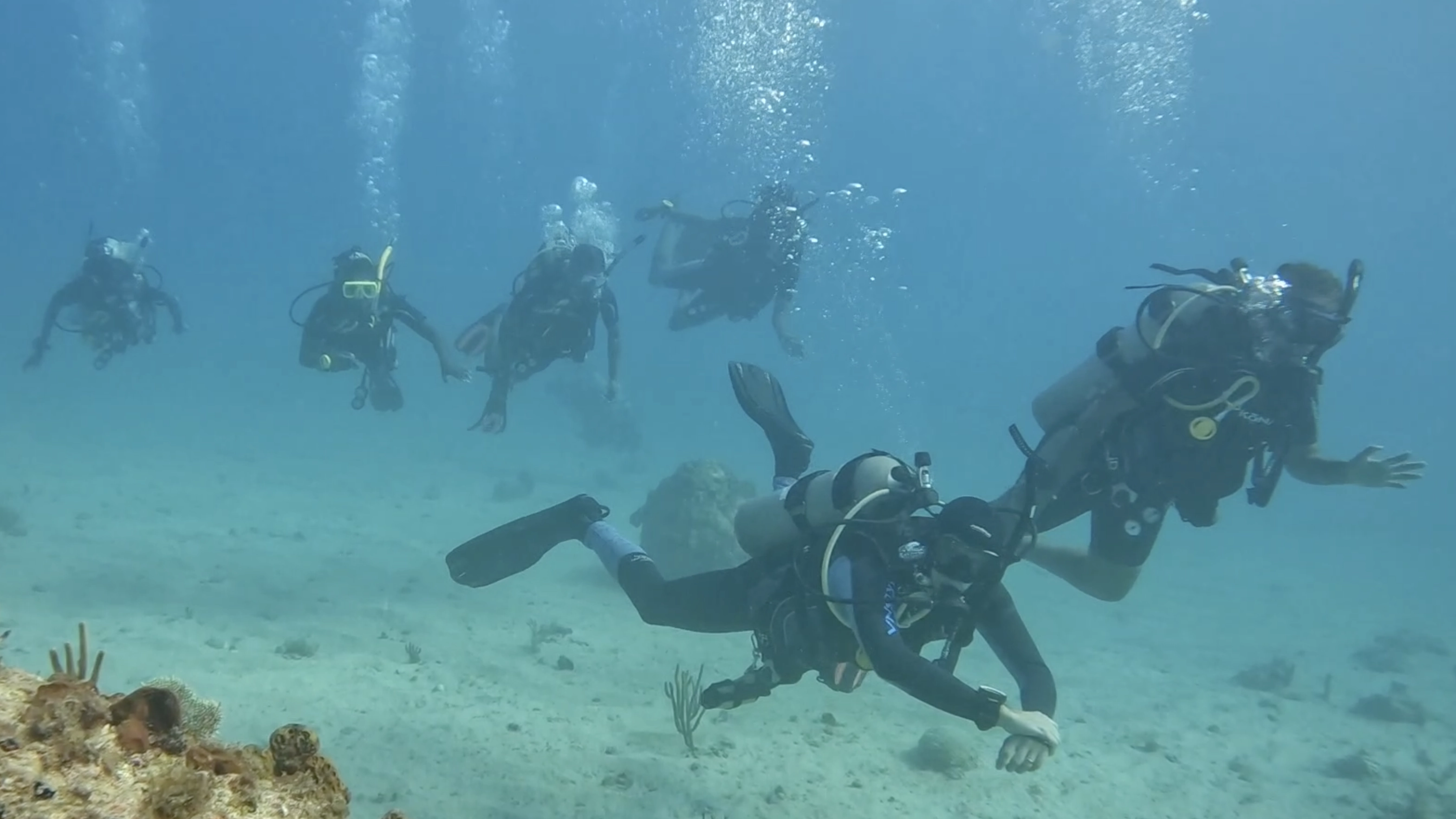
We fund and run fully certified PADI dive courses for local students aged 13 to 18, delivered by qualified instructors on the islands. After completing their PADI Open Water certification, participants go on to Advanced Open Water training and receive dedicated education in marine conservation specific to Antigua & Barbuda's ecosystems.
Graduates are invited to join the ABOT Volunteer Dive Team, where they continue developing their skills, take part in reef cleanups, and act as mentors for future cohorts. Two courses run each year, with six to eight students per course.
 Conservation
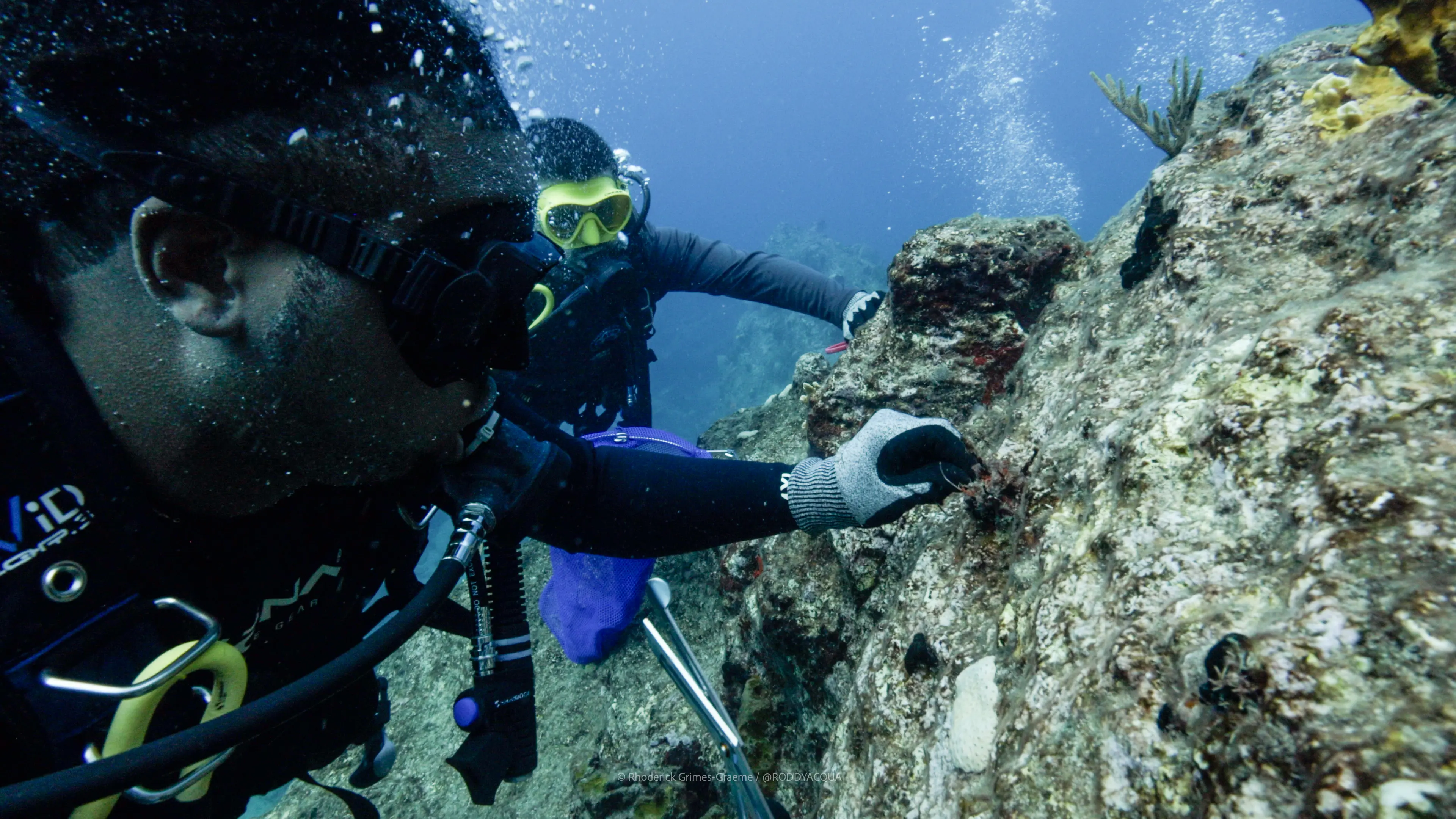
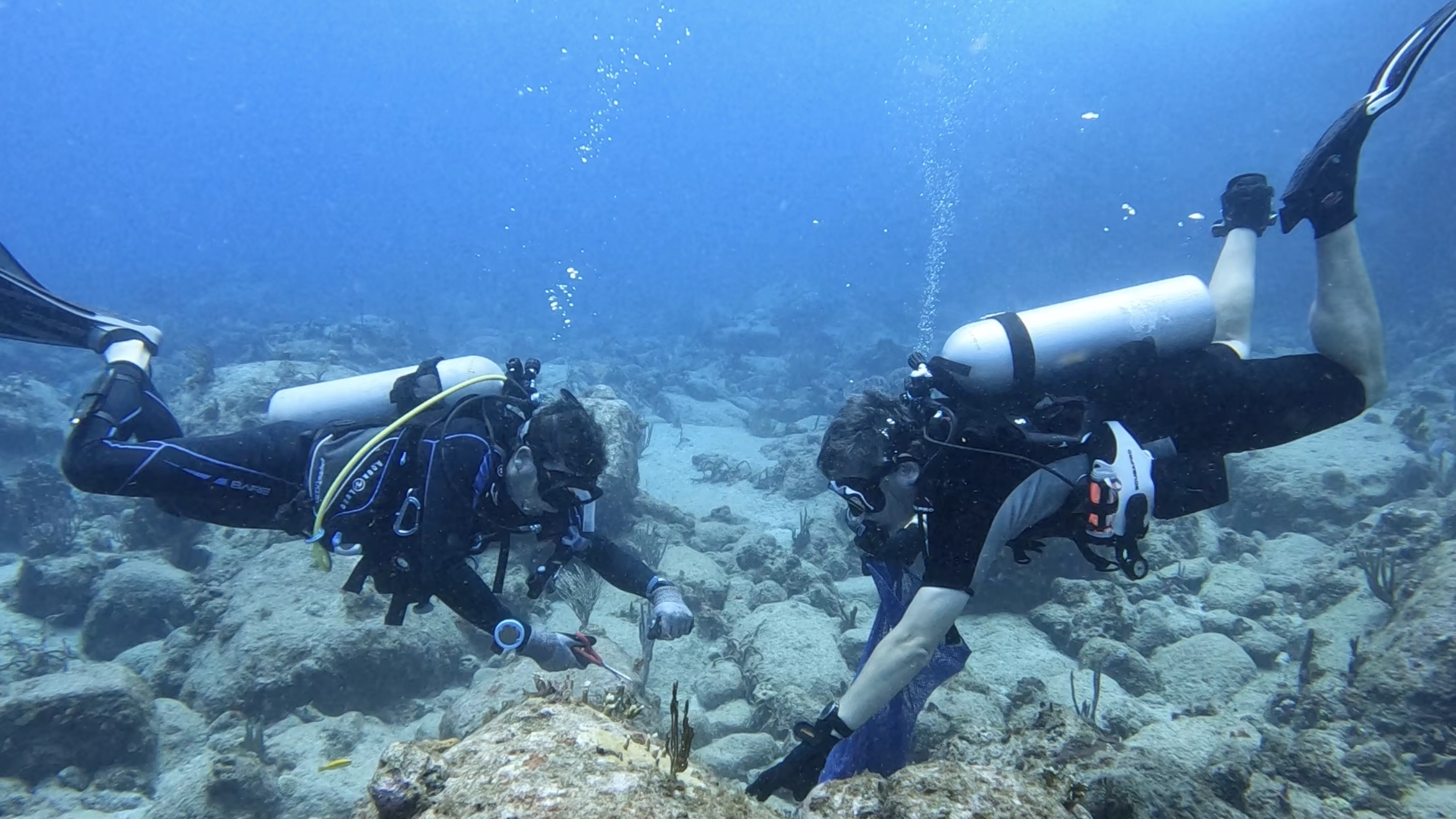
Our volunteer divers carry out regular underwater cleanups to remove the debris and ghost gear that silently damage Antigua and Barbuda's coral reefs.
Discarded fishing line, ghost nets, boat wrecks and other debris don't just look unsightly on a reef — they smother coral, entangle marine life and cause lasting damage to ecosystems that have taken centuries to form. Regular, systematic cleanup is essential.
Our experienced Volunteer Diver Team carries out regular reef cleaning dives across Antigua & Barbuda's most important reef systems, removing debris, collecting data and protecting the fragile coral habitats that underpin so much of the islands' marine biodiversity.
We also work with coral nursery programs, helping to clean their nurseries and outplant genetically resilient corals onto our reefs.
If you're a certified diver and meet our minimum requirements, we'd love to have you join our growing team of passionate divers who are truly making a difference.
 Cleanup
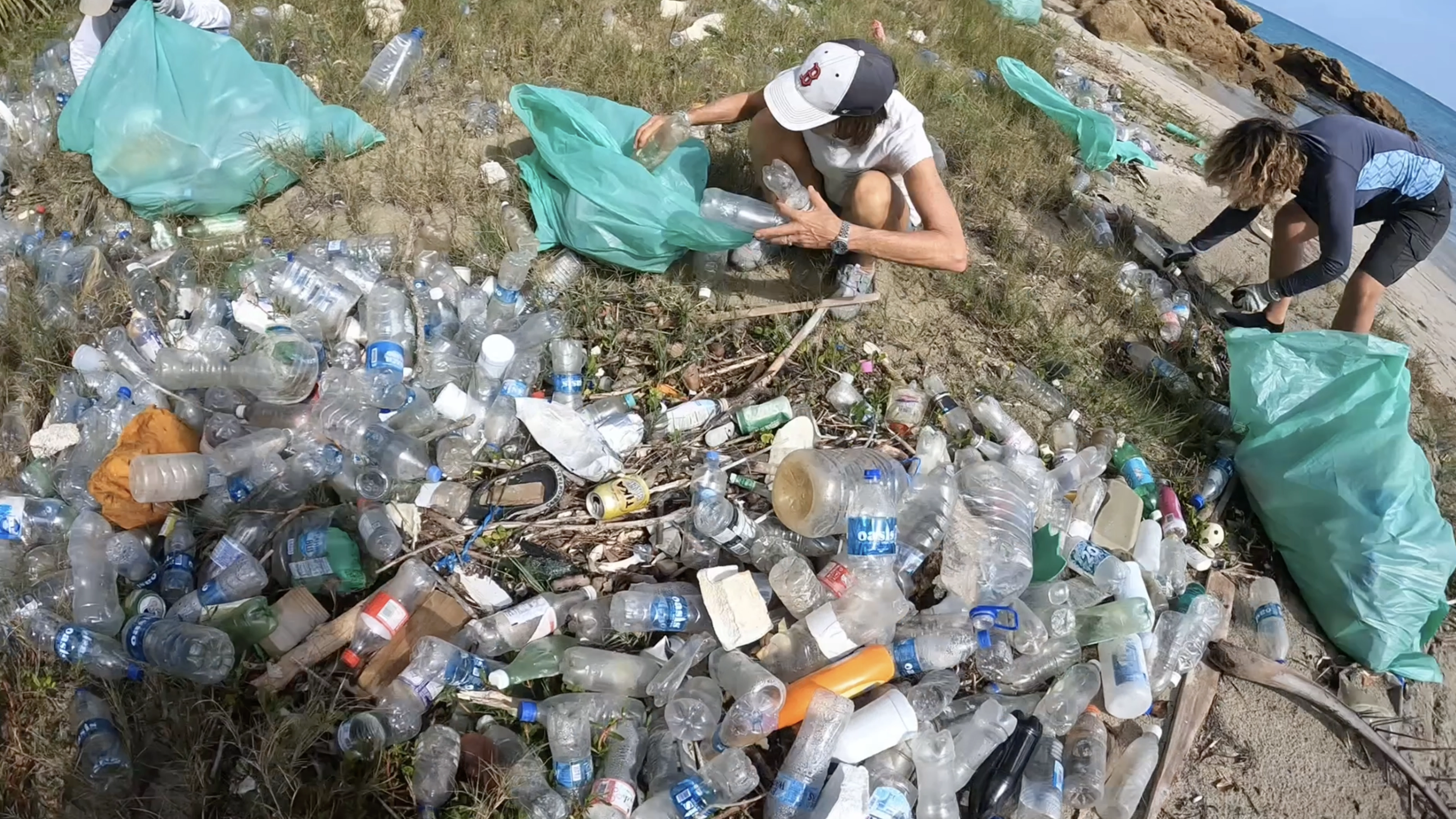
Removing plastics, fishing nets and debris from beaches, mangroves and coastal shallows — protecting turtle nesting sites and removing it at its source.
Accessible beaches get cleaned. The remote ones — offshore islands, mangrove-fringed shores, hard-to-reach coastline — accumulate plastic and debris for years, undisturbed. That's exactly where ABOT goes.
Our Wild Coast Cleaning Group has removed hundreds of pounds of plastic bottles, fishing gear and marine waste from our coastlines that would otherwise have gone untouched for years.
Plastics on coastlines break down into microplastics that enter the food chain, harm nesting sea turtles, and wash back into the reefs we're trying to protect. Removing it at its source is one of the most direct conservation interventions we can make.
 Awareness
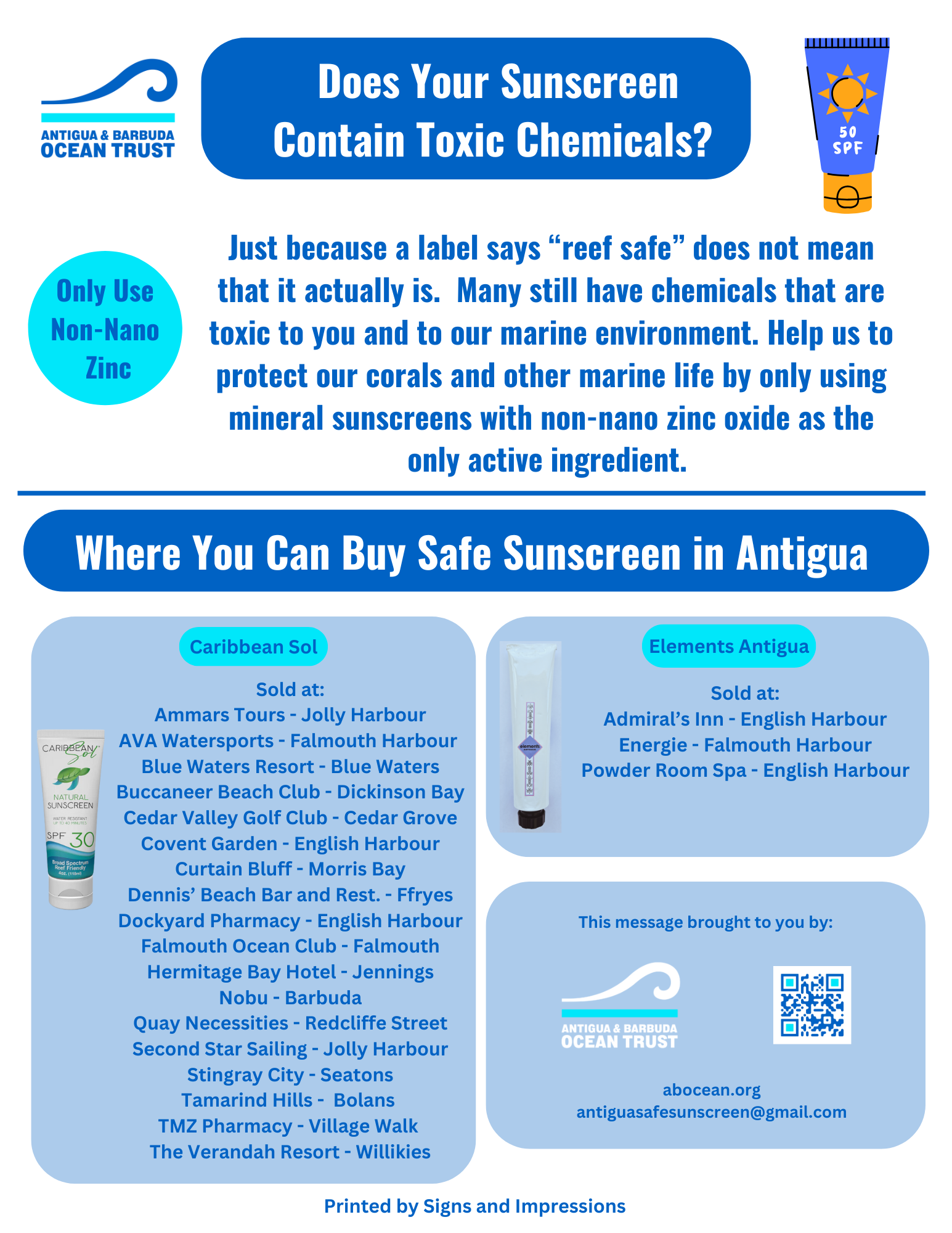
Most people don't know their sunscreen is damaging Antigua's coral reefs. We're changing that, one bottle at a time.
An estimated 14,000 tons of sunscreen enter the world's oceans every year. Many of the chemical compounds found in conventional sunscreens — oxybenzone and octinoxate and a list of other toxic chemicals — are toxic to coral larvae, disrupt marine ecosystems, and contribute to coral bleaching.
Our Sunscreen Initiative educates visitors and residents about the real impact of their sunscreen choices, and actively promotes reef-safe alternatives — specifically mineral sunscreens using non-nano zinc oxide as the only active ingredient. We work with hotels, dive operators, pharmacies and watersports centers across the islands to make reef-safe sunscreen easier to find.
"Reef safe" labeling is not regulated and can be deeply misleading. Many products carrying the label still contain harmful chemicals. We cut through the confusion with clear, science-based guidance that anyone can act on immediately.
 Community
Long-term change starts with the people who live here — our outreach work builds a community that genuinely cares about its ocean.
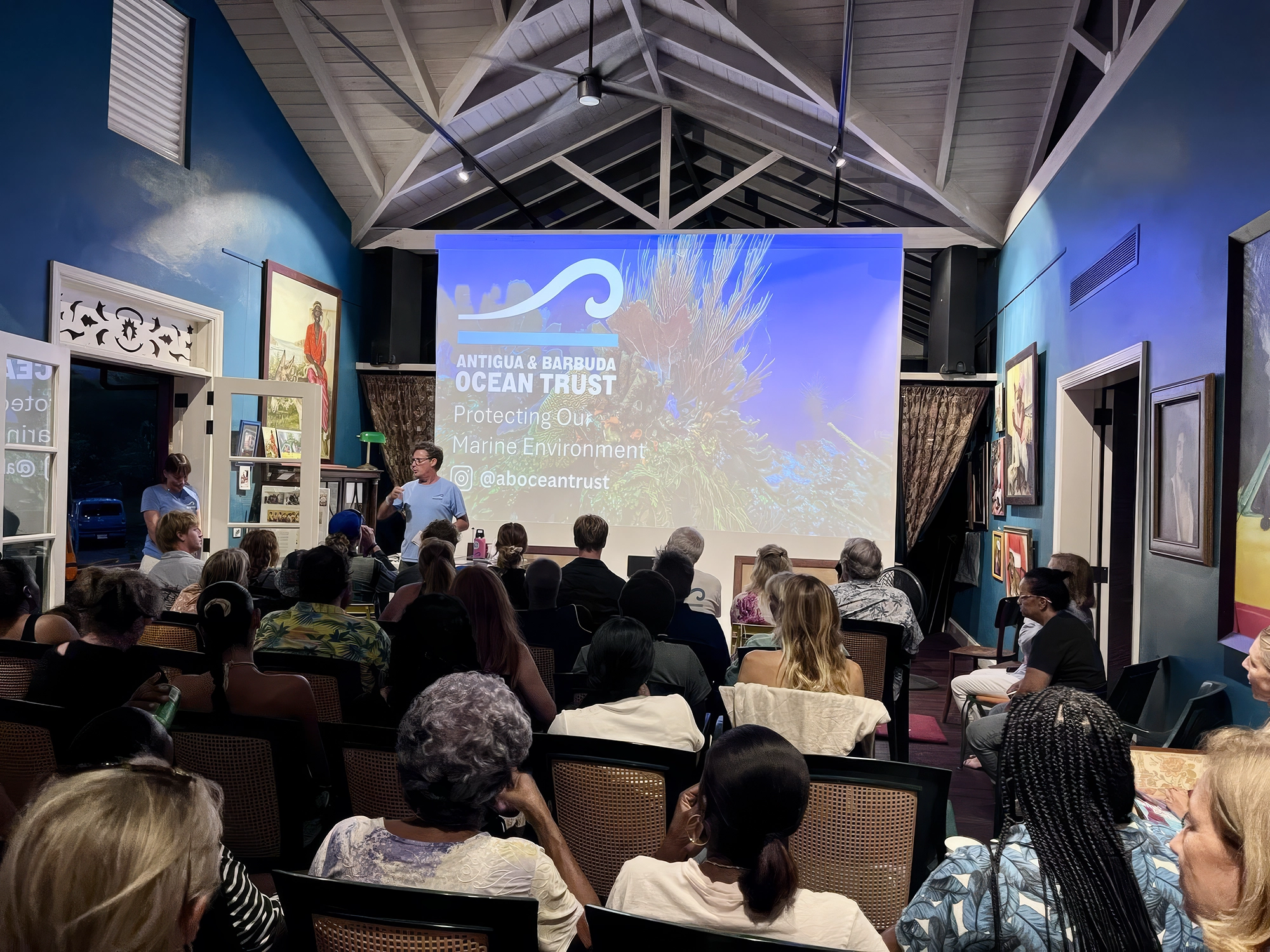
Conservation only works when the local community is part of it. ABOT runs a program of public events, film screenings, school visits and community engagement activities designed to build genuine, lasting awareness of marine conservation across Antigua & Barbuda.
We host public events that bring the community together around shared concern for our islands' natural world. Our outreach materials include awareness posters on reef-safe sunscreen, sea turtle protection, and the recent return of the Greater Caribbean Manatee to Antiguan waters.
We also engage in advocacy around the International Whaling Commission, actively encouraging the Antiguan and Barbudan government to strengthen its position on the protection of whale species in our region.
The goal isn't just to inform — it's to inspire. Every person who leaves one of our events with a greater understanding of the ocean that surrounds them is a potential future volunteer, donor, or advocate for marine conservation.
 Invasive Species Control
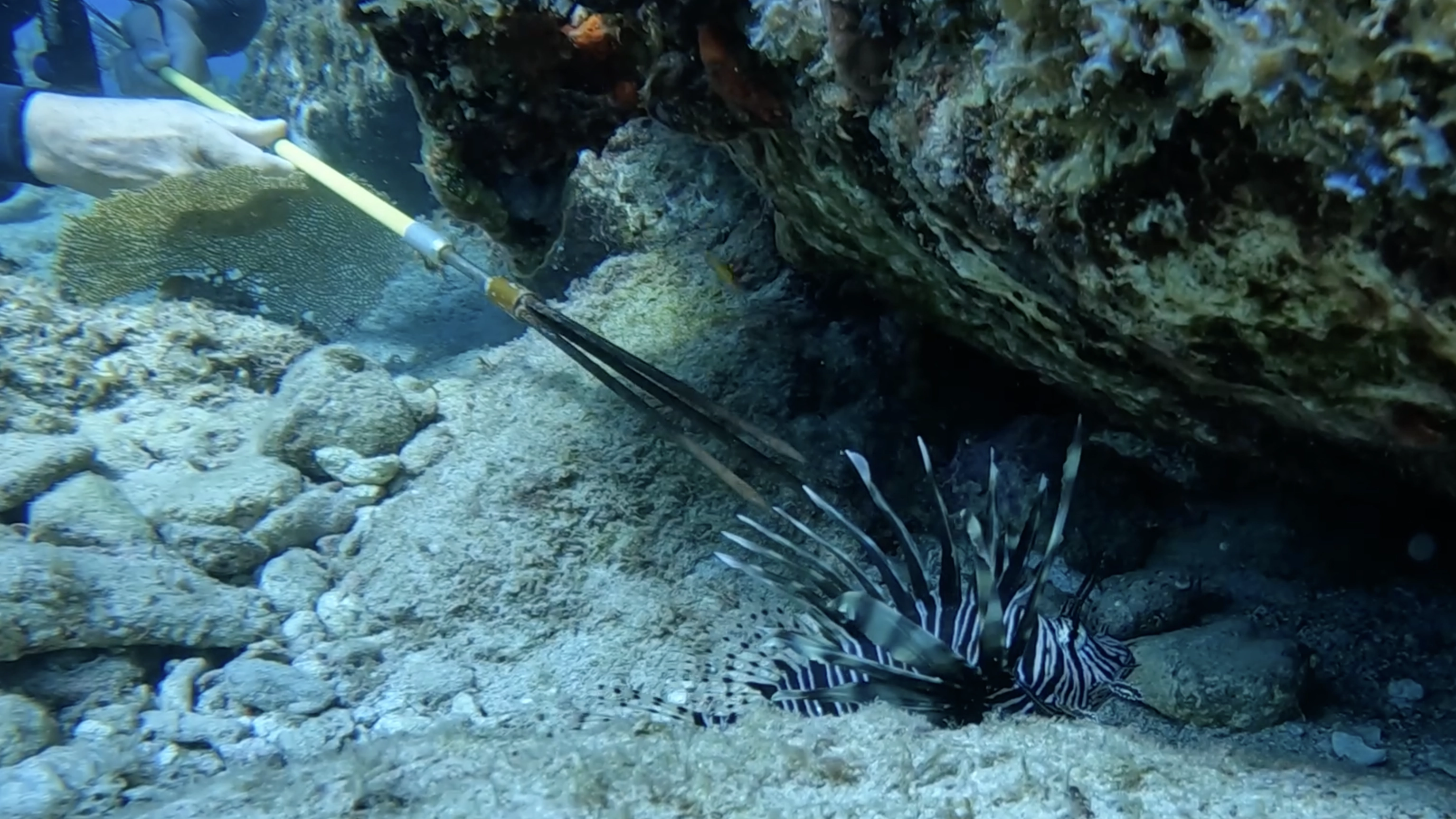
Introduced to the Atlantic in the 1980s, lionfish have no natural predators here. They reproduce every four days, eat everything in their path, and have reduced some native fish populations by up to 90%.
They prey on snapper and grouper — hurting local fisheries — and consume the herbivorous fish that keep algae off coral reefs. ABOT's Volunteer Dive Team carries out targeted lionfish hunts across Antigua & Barbuda's reefs, systematically reducing local populations to protect native species.
There's a silver lining: lionfish are easy to spear, and despite the venomous spines the meat is delicious — richer in omega-3s than wild Atlantic salmon. Every hunt is both conservation and a good meal.
Every program we run depends entirely on the generosity of our donors and the dedication of our volunteers. Whether you give, dive, clean, or simply spread the word — you're an important part of our growing team.